

Latin America has more than 800 free zones. The number matters less than what is now happening inside them. Over the last two years the instrument has been used for purposes it was never designed to serve, and the shift is being legislated faster than most operators have adjusted their offer. Six movements are worth watching.
1. The regime has become macroeconomic
In Costa Rica, free zones account for 15% of GDP and roughly three quarters of the country’s foreign direct investment. In the Dominican Republic, they generate more than half of national exports.
At that scale the regime stops being a technical matter for trade ministries. It becomes a political asset, one that must be defended and explained publicly.
2. Services have displaced manufacturing
Two out of every three companies in Costa Rica’s free zones are now services. The low-cost assembly model is behind us.
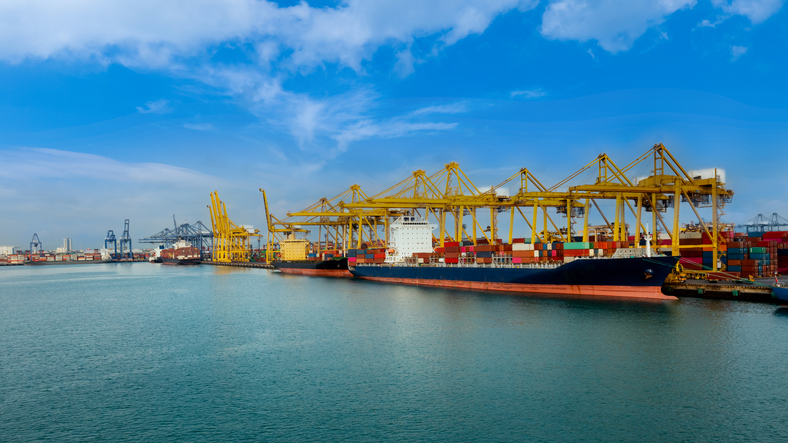
The consequence is physical. A services tenant needs connectivity, talent and floor space, not hectares. Zones built for containers are competing for clients who will never fill one.
3. Brazil turned an export processing zone into an exporter of digital services, and energy is what decided it
In November 2025 Brazil authorised five data centers in the Pecém export processing zone, ByteDance among them, approved to process data exclusively for the external market. The same zone already hosted green hydrogen and green ammonia projects.
A regime created to ship goods is now shipping bandwidth and molecules. It is the most consequential precedent in the region in a decade, and it is replicable anywhere with power, fibre and a customs authority willing to reinterpret its rules.
None of those projects chose Brazil for its tax treatment. They chose it for renewable generation and grid access. For a data center or a hydrogen plant the binding constraint is transmission capacity and permitting timelines, not the corporate rate. Zones that can guarantee power are reaching investment that zones offering only land cannot.
4. The regime is being detached from the design it was born with
Peru handed the instrument to the private sector. Its 2025 law on private special economic zones, regulated in April 2026, lets private developers create and operate the zones themselves, under an income tax schedule starting at zero for five years. The state writes the rules; someone else builds the zone.
Colombia broke the perimeter. Its 2026 decree on railway free zones lets rolling stock operate outside the declared area and connect to the national network — an exception to the delimited, exclusive enclosure that has been the backbone of the instrument since it was invented.
Different routes, same destination. Both countries stopped treating the free zone as a fixed enclosure the state builds, and started treating it as a rule that can be applied wherever it works.
5. The services free zone is moving into the office tower
Uruguay inaugurated WTC Punta del Este Free Zone in December 2025: twenty-seven floors of offices under a free zone regime, not a fenced park on the edge of town.
In a services economy the natural form of a free zone is a building. For any World Trade Center with underused floors and international operations, that is not a distant idea. It is an existing regime applied to an existing asset.
6. The tax advantage is narrowing, and something has to replace it
Brazil, Uruguay and Panama have all introduced minimum taxation or substance requirements. For groups above the international thresholds, a low tax rate no longer differentiates one destination from another.
What replaces it is everything that is harder to copy: energy delivered to the site, permitting that runs on schedule, available talent, logistics, and reasonable confidence that the regime will outlast the government that wrote it.
What this adds up to
The Latin American free zone is moving away from what it was designed to be — a fenced enclosure for assembling goods for export — and towards a regulatory platform applied to data, energy, services and infrastructure. The countries reading that shift early are the ones already legislating it.
For operators, the practical consequence is that competition is no longer local. A zone in Ceará, Punta del Este or Barranquilla is on the same shortlist, evaluated by the same investors, in the same week. Closing that distance is what Free Zones Go Global, the initiative of the WTCA and Araújo Ibarra, was created to do.
Ready to Turn Your Free Zone Into a Destination Investors Can Name?
Schedule a session with our team