


As countries seek new ways to attract investment, strengthen food security, and increase the value of agricultural production, agro-industrial parks are emerging as a strategic instrument for economic development. By bringing agricultural processing, logistics, technology, and trade infrastructure together, these parks can help transform local production into higher-value goods and connect producers with international markets.
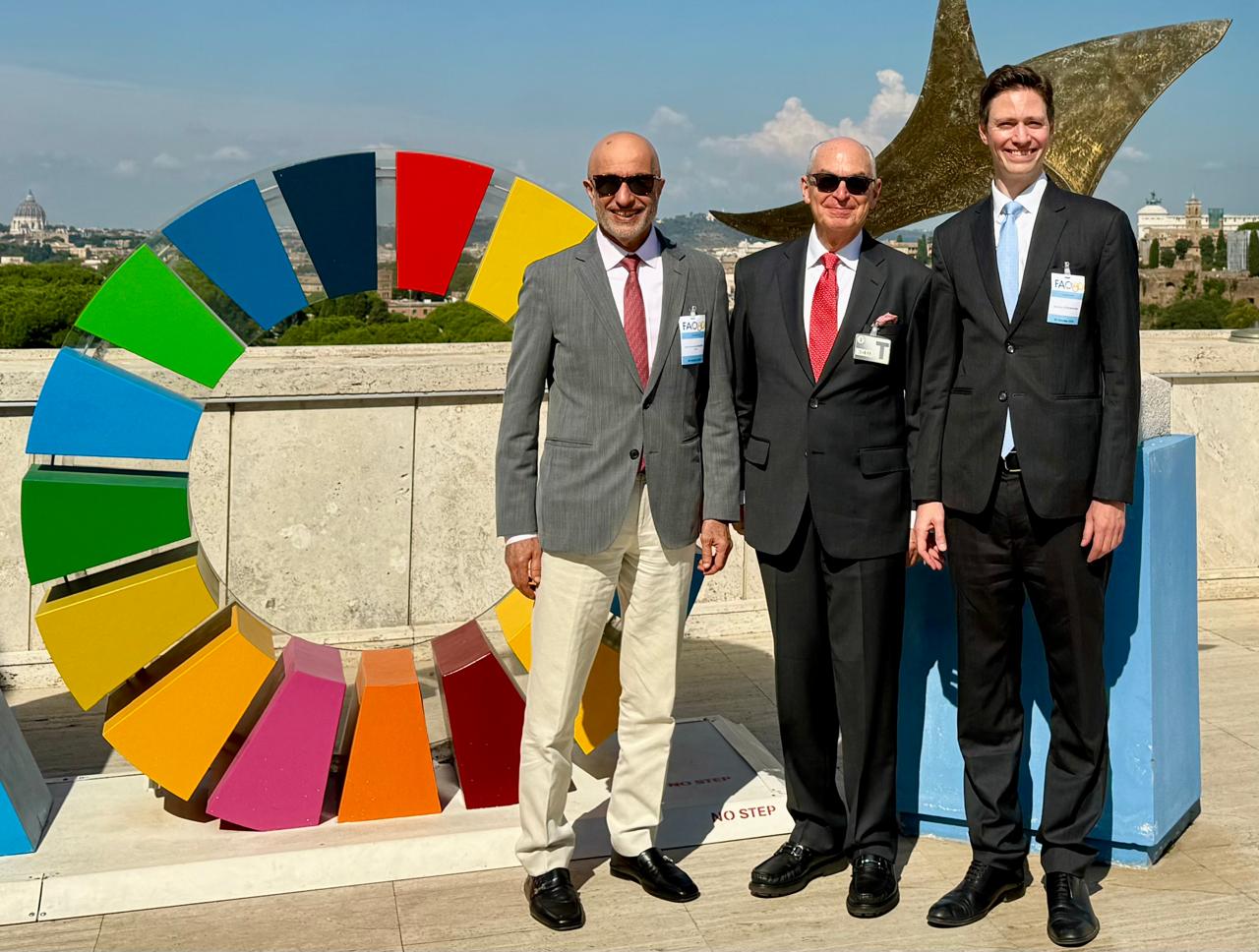
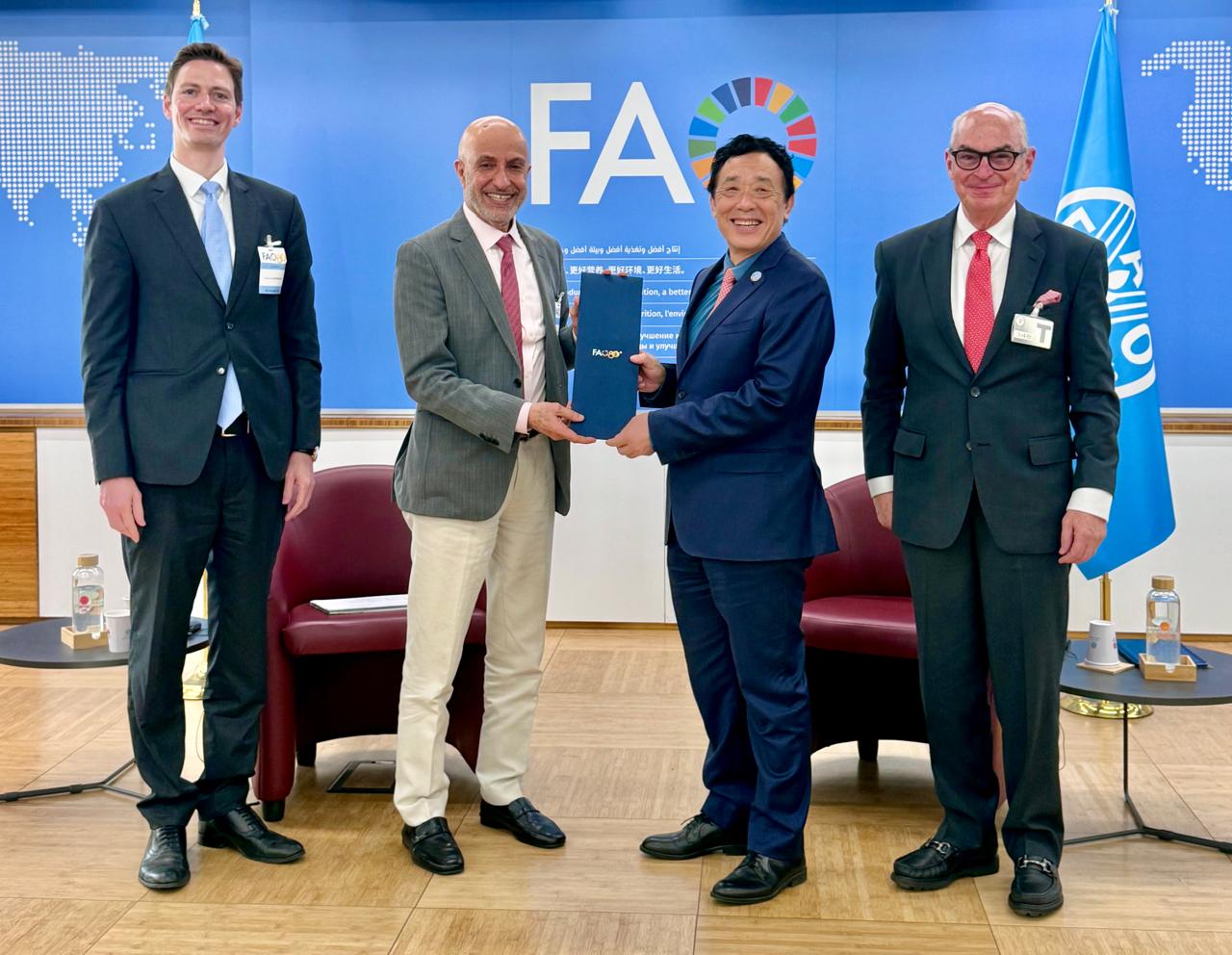
This opportunity was at the center of a meeting held on 1 October 2026 at the headquarters of the Food and Agriculture Organization of the United Nations (FAO) in Rome, where the World Free Zones Organization (WFZO) and FAO explored potential areas of collaboration to advance agro-industrial parks, also known as agro-industrial special economic zones or agrizones.
The WFZO delegation was led by its Chairman, Dr. Mohammed Al Zarooni, and included Martín Gustavo Ibarra, Founding President of the Association of Free Zones of the Americas (AZFA) and Advisor to the WFZO Board, alongside WFZO CEO Dr. Matthew Stephenson.
From agricultural production to value-added industries
Agro-industrial parks offer an opportunity to integrate different stages of the agricultural value chain within a coordinated economic and logistical environment. By bringing together food production, processing, cold-chain infrastructure, packaging, agricultural inputs, and distribution, they can help countries capture more value from their natural resources and strengthen their position in international markets.
Their potential extends beyond food processing. These parks can serve as trade and redistribution hubs, improve connections between agricultural producers and global buyers, support research and development, and encourage the adoption of technologies that improve productivity and reduce food losses.
Existing economic zones may also provide a foundation for this development. With more than 8,000 zones operating across over 145 countries, the global zone ecosystem offers opportunities to repurpose existing infrastructure for agro-industrial activities, including processing facilities, warehouses, and cold-chain logistics.
Investment, food security, and sustainable development
The strategic value of agro-industrial parks lies in their ability to connect investment attraction with broader economic and development objectives.
For investors, these parks can offer an integrated environment supported by trade facilitation, logistics infrastructure, and potentially competitive fiscal frameworks. For governments, they can help strengthen domestic production capacity, improve food distribution, and create new opportunities for agricultural exports.
Local farmers and small producers can also benefit from stronger links to processing companies and international supply chains. By connecting primary production with industrial activities, agro-industrial parks can support job creation, expand market access, and help rural economies capture a greater share of the value generated throughout the supply chain.
Their development can also contribute to more sustainable production systems through shorter logistics routes, reduced food losses, renewable energy, and innovations in agricultural inputs and processing.
Latin America has an important role to play in agro-industrial parks
With more than 800 economic zones across Latin America, the region has a substantial foundation on which to develop agro-industrial initiatives. Countries such as Colombia and the Dominican Republic, among others, have opportunities to explore how existing zone infrastructure can support agricultural processing, logistics, and export-oriented production.
The challenge is to move beyond the traditional role of zones as platforms for trade and manufacturing and consider how they can facilitate closer integration between agricultural production, industrial transformation, and international markets.
For Araújo Ibarra, this development highlights the importance of approaching economic zones as instruments for investment attraction and productive transformation. Their potential depends not only on the incentives they offer, but also on how effectively they connect infrastructure, investors, producers, technology, and access to international markets.
Advancing WFZO–FAO collaboration on agrizones
The discussions between the WFZO and FAO represent a step toward developing a more structured framework for collaboration on agro-industrial parks. The organizations have identified focal points to advance the initiative, with further discussions expected at the WFZO World Congress in the Dominican Republic in May 2027.
As international cooperation progresses, agro-industrial parks could become an important platform for linking investment promotion with food security, value-added production, and sustainable economic growth.